
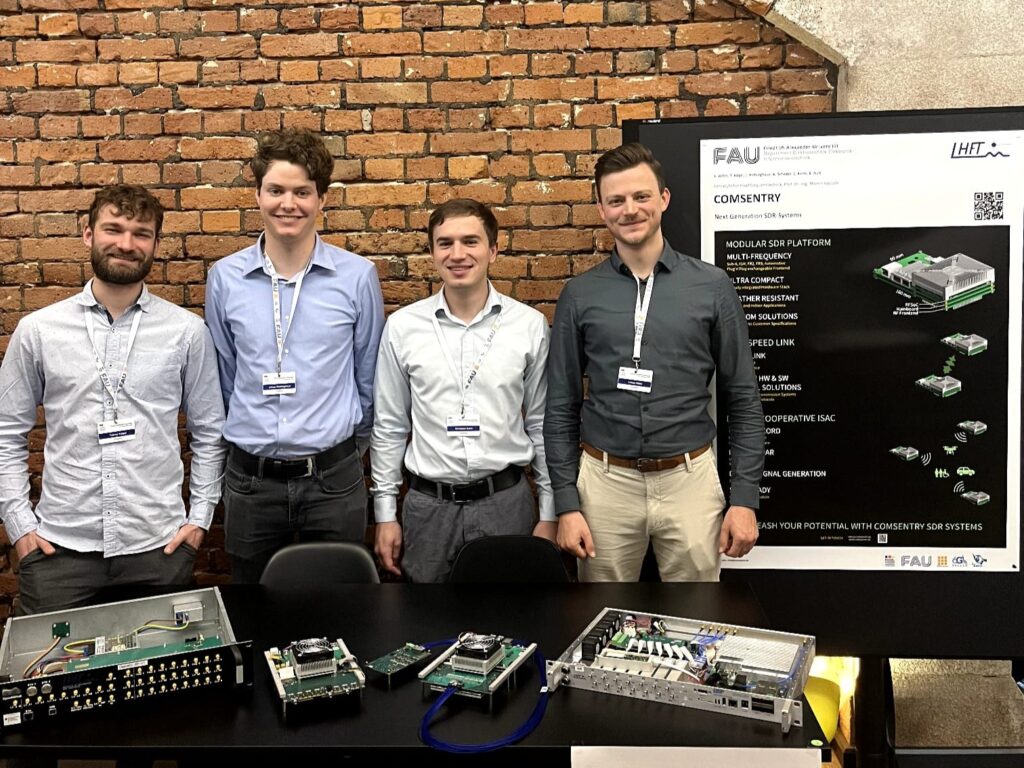

COMSENTRY is building the SDR platform of the future
Help us to better understand the target audience so that we can make our system market-ready.
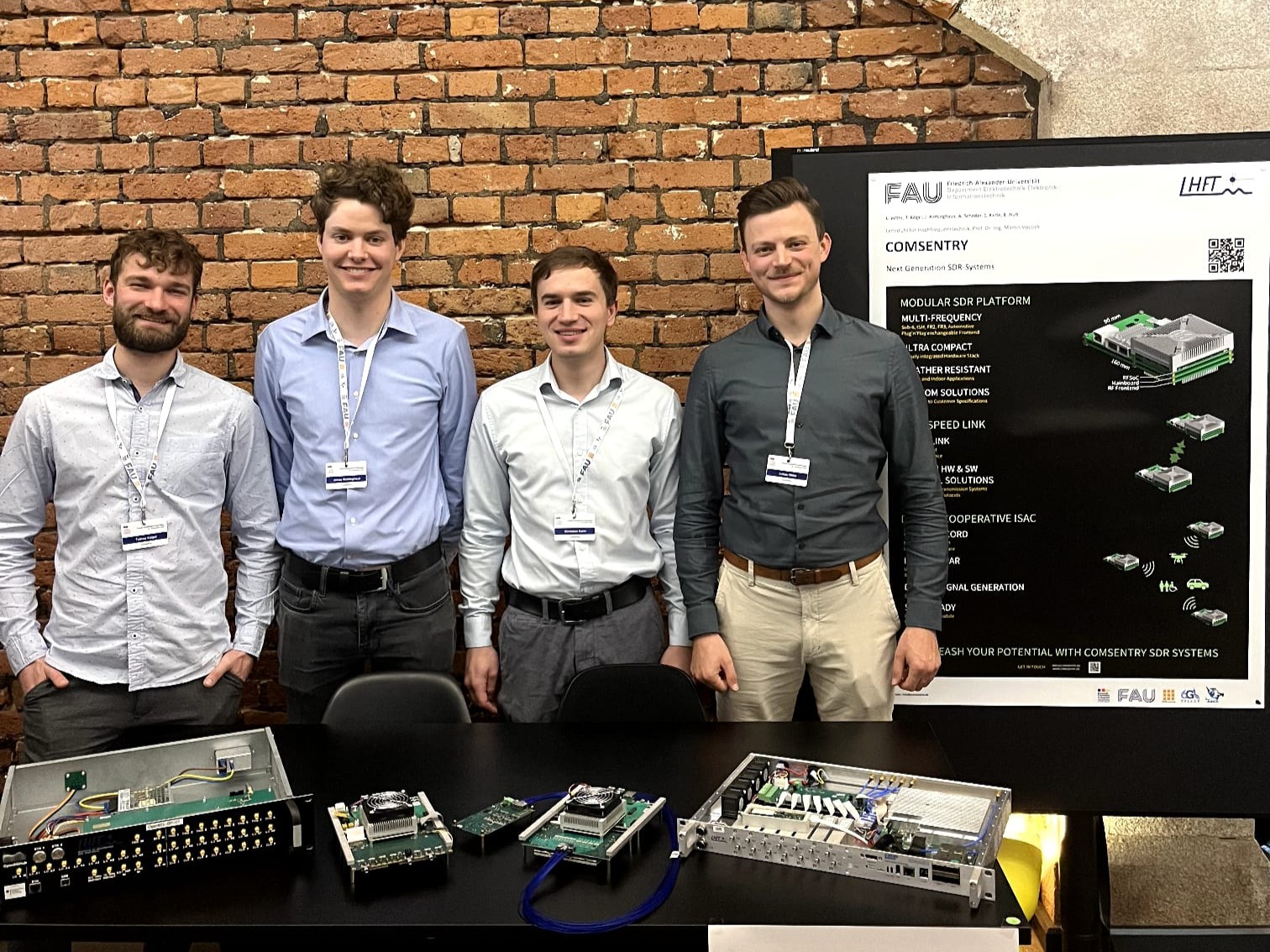
Comsentry are three research assistants from FAU and one research assistant from KIT. We are developing a modular and robust SDR platform capable of meeting the growing demands for high-performance platforms for wireless communication, radar, and integrated sensor systems. Since the system offers a wide range of potential applications—including in the automotive, telecommunications, and critical infrastructure protection sectors—we now want to better understand which target groups to address and how best to do so.
Description
To provide a solution, our system is not only robust but also designed for outdoor use. Thanks to its modular design, the setup is as compact as possible, allowing the system to be useful even in areas that offer little space for conventional systems. This gives us the opportunity to think outside the box. Now, with YOUR expertise, we are aiming to identify a potential direction for the next steps in development, which will help us make the system even more user-friendly.
Challenge 1
#Target Group: In your opinion, which target group can benefit the most from a modular SDR platform for communications, radar, and sensors—and how do the requirements differ among these target groups?
Challenge 2
#Required Knowledge: How much technical knowledge should be required to use our platform, and what features, software solutions, or support services could lower the barriers to entry for customers?
Challenge 3
#Business Model: How should a modular SDR platform consisting of hardware, software, and services be offered: as freely configurable modules, fixed packages, or some other model—and which offering would be particularly attractive to different customer groups?
Check out the WHERE TO PLAY and CUSTOMER DISCOVRY frameworks.
(They provide startup best practice advice so you don’t have to reinvent the wheel 🙂 )
Smallest player = foot in the door?
Implementation support, such as workshop with users, 2-5 days of support
early adopter offer
communit approach
support kit, incl. „if you need XY“, you need to do „…“
(1) I would first group the target customers into different clusters based on their various features and intends. This would enable addressing them differently with offering them different possiblities, modules and service configurations.
(2) The problem of data acquisition, especially for training the involved AI modules, is a non-trivial case.
Defence Sector
Security of cities as well as security during driving
Academically testing
Blind people
A validation for f the use cases with the real end-users would help you understand the rate of flexibility vs predefined functions.
E.g. for test purposes flexibility is desired;
Military engineer cares about simple and reliable input/output